Can I See US Clients While Living Abroad as a Therapist?
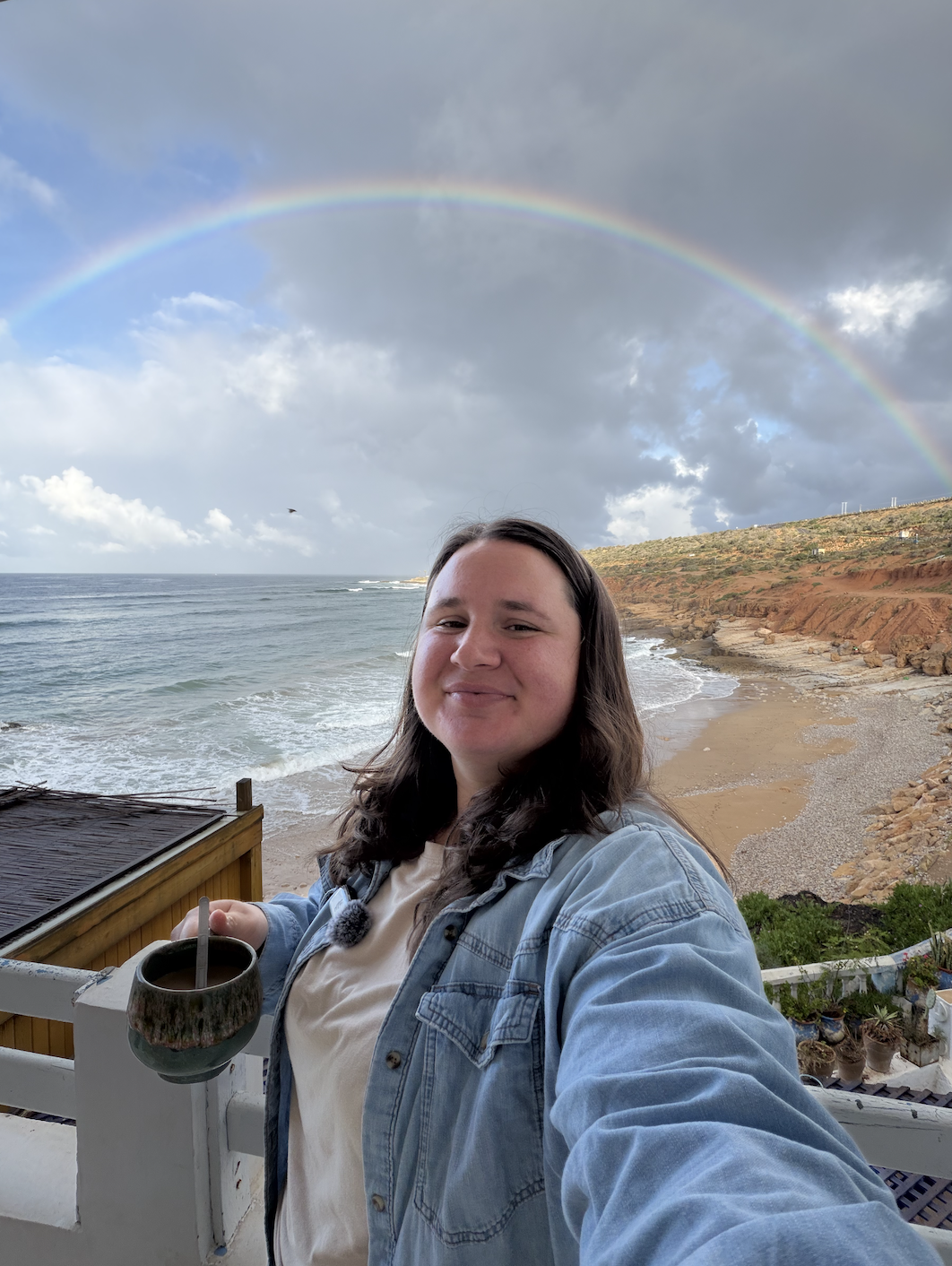
Hi, I’m Dr. Annie Krajewski. I’ve been traveling the world and running my private practice full-time for 3+ years!
Can you see US clients while living abroad as a therapist? Yes, you can! It's perfectly legal, and plenty of therapists are already doing it inside the Out of Office Therapist Village.
But a few things need to be in place before you pack your bags, including the right licensing setup, insurance that covers you overseas, and systems that keep your practice running smoothly.
I've been running my private practice full-time for 3+ years, seeing US-based clients while living in places like Morocco, Thailand, and Indonesia. So, I have extensive personal experience with all of the questions that tend to trip therapists up when they start thinking about moving abroad!
Here's everything you need to know.
Is it legal to see US clients while living abroad as a therapist?
Yes, it's legal, as long as your clients are located in a US state where you hold a license.
Your license is tied to where your client is during the session, not where you are.
So if you're licensed in California and your client is physically in California during your call, you're practicing within the bounds of your license, whether you're logging in from San Diego or one of these best countries for digital nomad therapists.
That said, a handful of state boards have rules about where the provider can be located during sessions, so you'll want to confirm your own state's stance.
If your state's telehealth regulations don't mention provider location, send your licensing board an email to ask them and keep their response on file so you have a record.
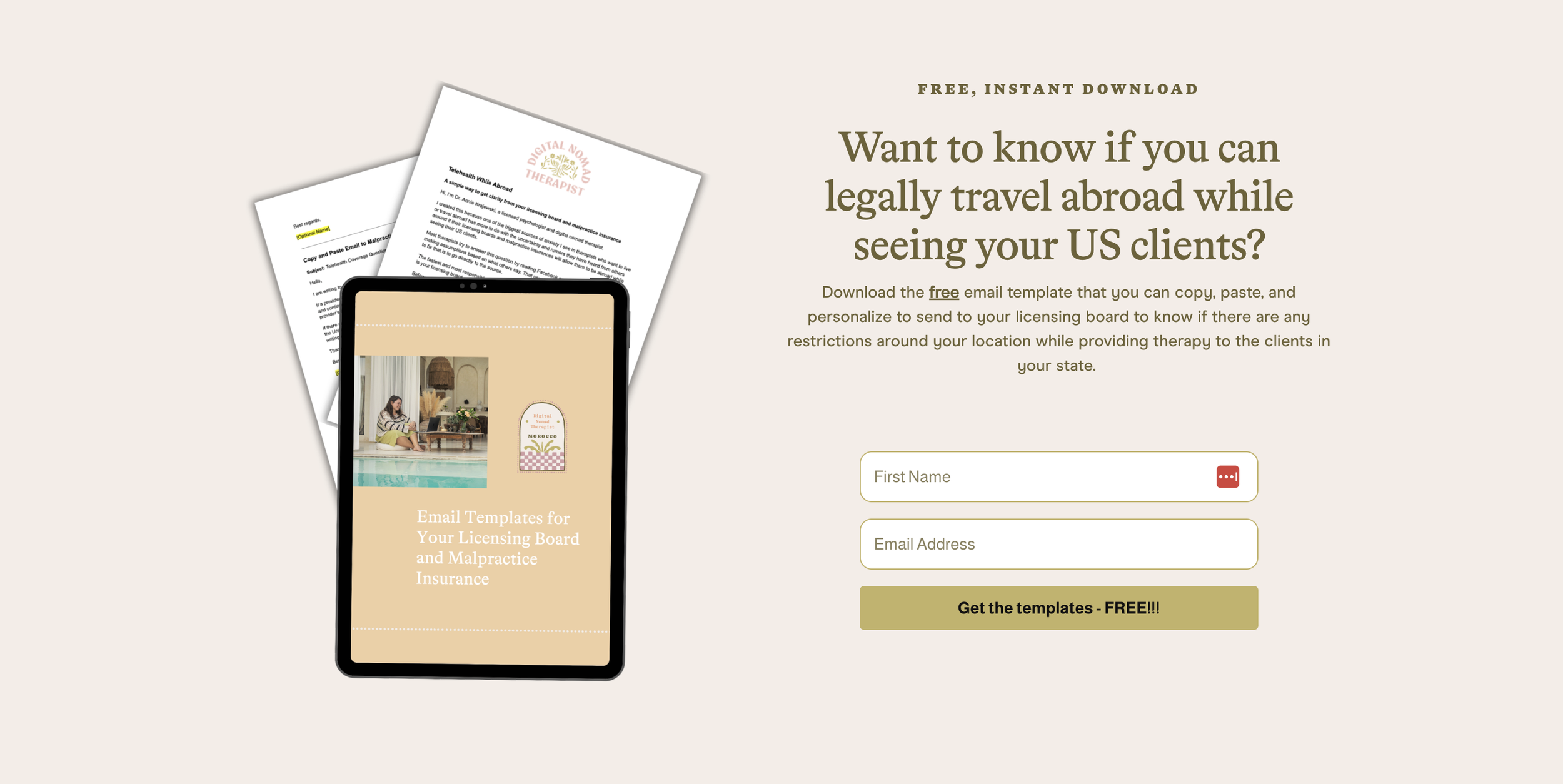
Use this FREE email template to check if you can travel abroad while seeing your US clients.
If your state does restrict practicing from abroad, you still have options! You can get licensed in states with more flexible rules and build your caseload there before you move.
Why it's a great idea to see US clients while living abroad as a therapist
Beyond the obvious appeal of waking up somewhere new, building a remote practice tends to reshape how you work in ways that make your whole life better.
When your income isn't tied to a physical office, you start designing a practice around the life you want instead of squeezing your life into the gaps around your practice.
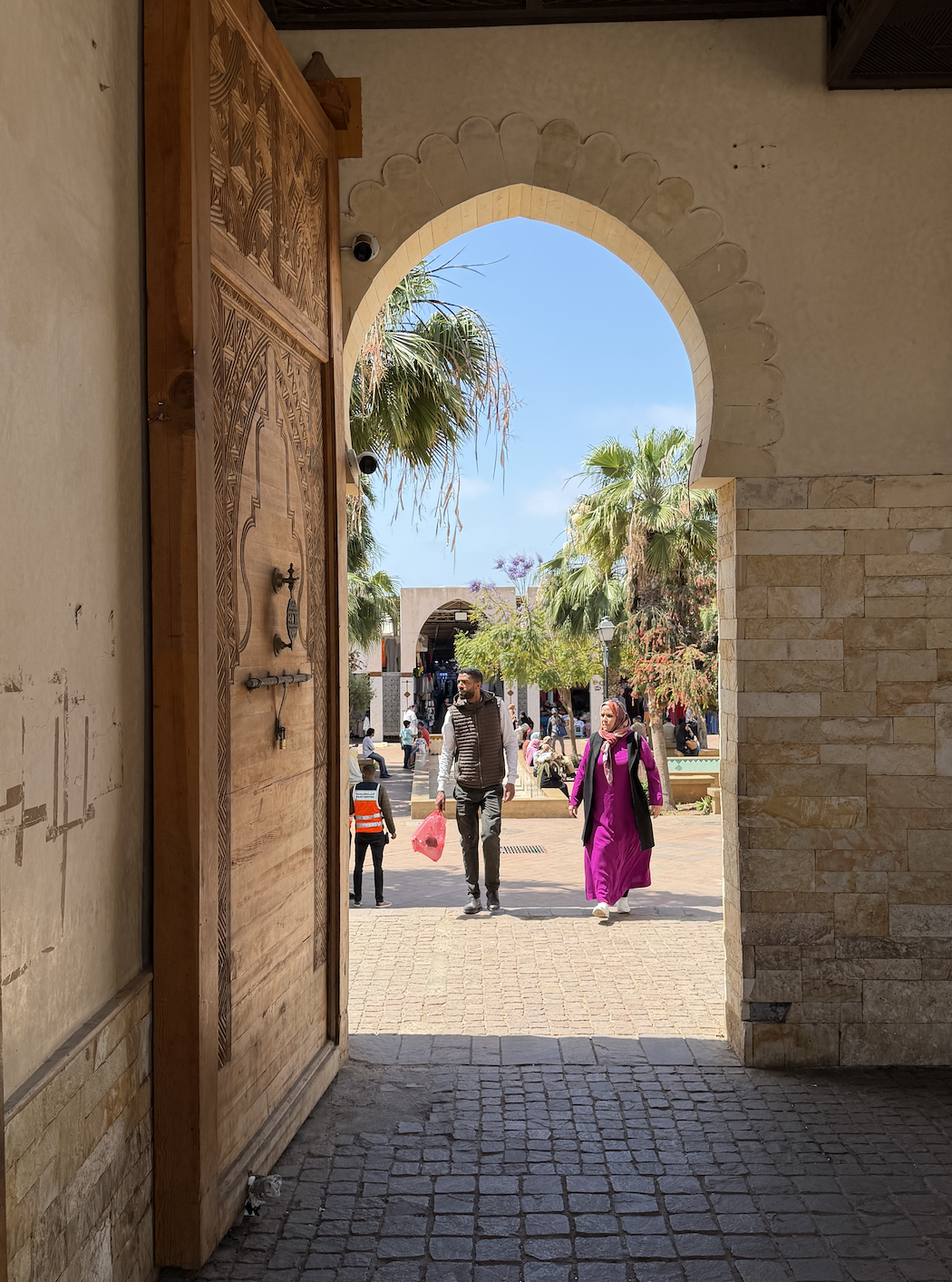
One of my favorite things in life is traveling to beautiful places like Morocco!
Here are a few of the biggest benefits (in my opinion!):
You get to travel and live in places you've always wanted to experience
You gain full control over your schedule
You skip the cost of office rent and the daily commute
You often pay far less for everyday living in countries like Portugal, Mexico, or Thailand
You're nudged into building a leaner, more intentional practice
Once you're running a practice that has to function from anywhere, you naturally tighten your systems, raise your rates, and let go of the busywork that used to fill your week.
You end up working less and enjoying your life more, which is the whole reason therapists consider moving abroad in the first place!
Learn how to become a traveling psychiatrist.
Things to consider while building your US-based practice
Moving your practice abroad is doable, but it takes some planning to do it well. Here are the main pieces you'll want to think through!
Malpractice insurance
Not every malpractice policy covers you when you're providing telehealth from outside the US. Some do, some charge a higher premium for it, and a few won't cover international locations.
Email your provider and ask whether your policy covers you while you're physically abroad seeing US clients (email, not a phone call, so you have it in writing!).
If your current liability insurance policy doesn't extend overseas, don't panic, because plenty of providers do cover international practice, and switching is usually straightforward.
The Trust, American Professional Association, and CPH cover you as long as you’re seeing clients in your state of licensure, following all of the necessary rules and regulations.
EHR and tech stack
Your tech is what keeps your US practice HIPAA-compliant and running smoothly from anywhere, so it's very important to get it right! You'll need:
An EHR that allows international logins (I use Jane and recommend it for therapists working abroad; use the code DIGITALNOMAD1MO for one month free!)
A video platform that filters out background noise (Zoom for Healthcare is my go-to)
A VPN to encrypt your connection (I recommend Proton VPN for Business with a signed BAA!)
You'll also want to confirm that your payment processor works from abroad and keep a US-based phone number even while you're out of the country.
Learn more about the best HIPAA-compliant platforms for therapists abroad.
Visa requirements & rules
How you handle visas depends on whether you're moving somewhere long-term or hopping between countries. Americans can usually stay in most countries for around 90 days without a visa, so if you're moving around often, you may not need one at all.
For longer stays in a single country, you'll likely need a long-term visa, and many countries (including European countries like Portugal and Greece and several in Latin America) now offer digital nomad visas for remote workers, including therapists.
A work visa usually won't apply, since those require employer sponsorship and you're self-employed running a US practice. A digital nomad visa is typically your best route!
US taxes
Living abroad doesn't change the fact that you're running a US business and are a US citizen. You'll still file your US taxes every year, just like you normally would. The US also taxes its citizens on their worldwide income, no matter where they live!
Taxes get more layered when you're earning US income while living in another country, especially if you're staying there long-term, because you may owe taxes to both governments.
But usually, when you pay taxes in other countries, you can qualify for a Foreign Tax Credit and reduce how much you owe in the US. I recommend consulting with an accountant to make sure you're filing everything correctly and aren't overpaying in US taxes!
Learn more about how to file taxes as a digital nomad therapist.
Logistics & tools
When you're moving between places, consistency in your practice comes from your tools and not your surroundings. Your apartment in Mexico won't look like your apartment in Portugal, but your setup can feel the same every time you sit down with a client!
Here are a few things that will help:
Book accommodations (Airbnbs included) where you can create a private, quiet space no one will walk through or overhear
Check reviews for reliable wifi before booking, and ask the Airbnb host for a screenshot of the WiFi speed
Build a portable, professional setup you can recreate anywhere, like a laptop on a stand at eye level, quality headphones, and a backup for internet, such as a hotspot plan or portable router
Plan around time zones, since Europe can put you working late into your night
This will take some trial and error, but you'll eventually land on a system that works well for you, and packing up and recreating your professional space will become second nature!
Marketing
You're running a private practice, which means that you have to market it to bring in clients. This becomes even more important when you go remote, because you lose the local word-of-mouth and walk-by visibility that comes with a physical office.
In my experience, clients largely don't care where you're located, but they do care about whether you're the right therapist for their struggle or situation. They want their therapist to understand what they're going through, so your marketing needs to be specific, credible, and relatable.
Marketing your practice can feel intimidating, and a lot of therapists assume they'll have to justify or explain being abroad. You don't! Focus on what you do and who you help, not where you are. The location question is mostly something that lives in your own head.
If you find yourself thinking you're not booking clients because you're overseas, I'd say with 99% certainty that you have a marketing problem and not a location problem. You need to sharpen how you talk about who you help and what you help them with!
Transitioning your current clients
If you already have a caseload, you'll want a plan for telling them about the change. To do that:
Let them know early
Be clear about what's shifting (your location)
Be clear about what's NOT shifting (the quality of their care)
If you're moving somewhere with a big time difference, address your availability upfront and let them know if their schedule needs to change.
For clients who'd rather have in-person sessions or aren't comfortable with the change, offer a few referrals. But in my experience, most people will be fine with it, especially when you're calm and confident about the move.
Get my 8-week checklist to start seeing US clients while living abroad as a therapist!
There's more to building a location-independent practice than I can fit into one article!
If you want a week-by-week plan that walks you through the most important steps, download my free guide: Your 8-Week Checklist to Become a Digital Nomad Therapist!
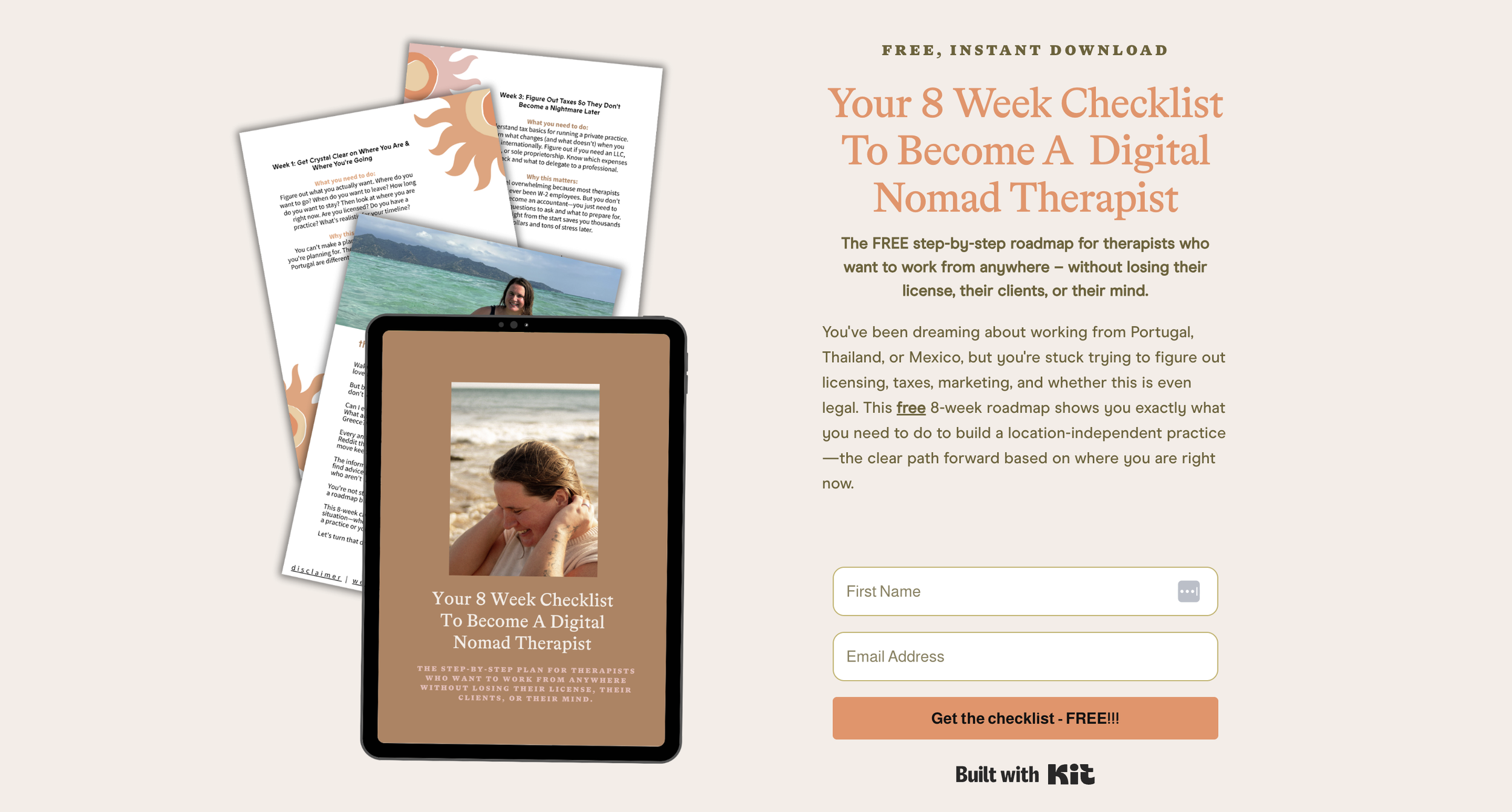
Your 8 Week Checklist to Become a Digital Nomad Therapist.
Can you see international clients as a US therapist while living abroad?
Most of the time, no.
Your US license lets you practice in the states where you're credentialed, and it doesn't carry over to clients who are physically located in another country.
Each country also has its own licensing rules, and most don't recognize US credentials without significant extra steps. So even though you're living abroad, your clients should stay US-based in states where you're licensed.
If you want to see clients internationally or in the country where you're staying long-term, one option some therapists explore is offering coaching rather than therapy. Coaching falls outside clinical licensure, which opens up who you can work with, but it's a different service with different boundaries, and many countries are strict about mental health terminology.
If you go this route, get clear on the line between coaching and therapy and talk to someone who knows the local rules.
For most therapists building a location-independent practice, the simplest and safest setup is keeping your clients US-based and living wherever you want.
Learn more about how a US therapist can work in Europe.
Join the Out of Office Therapist Village
Building a remote therapy practice is a lot easier when you're not figuring it out alone!
The Out of Office Therapist Village is a 12-month membership for therapists who are done choosing between the career they love and the life abroad they want.
The Out of Office Therapist Village.
Inside this membership, I'll personally help you to:
Set your own schedule and see your therapy clients anywhere you can find WiFi
Earn more money while seeing fewer clients
Legally take your US-based private practice abroad
You'll get a personalized roadmap and a 1:1 onboarding call, recorded lessons & resources, bi-weekly group coaching calls, and a place to ask the questions that don't have obvious answers, learn from other therapists, and get support from people who get it.
If you're ready to stop dreaming about a location-independent practice and start building one, come join us in the Out of Office Therapist Village!