How to Become a Traveling Psychiatrist in 7 Simple Steps
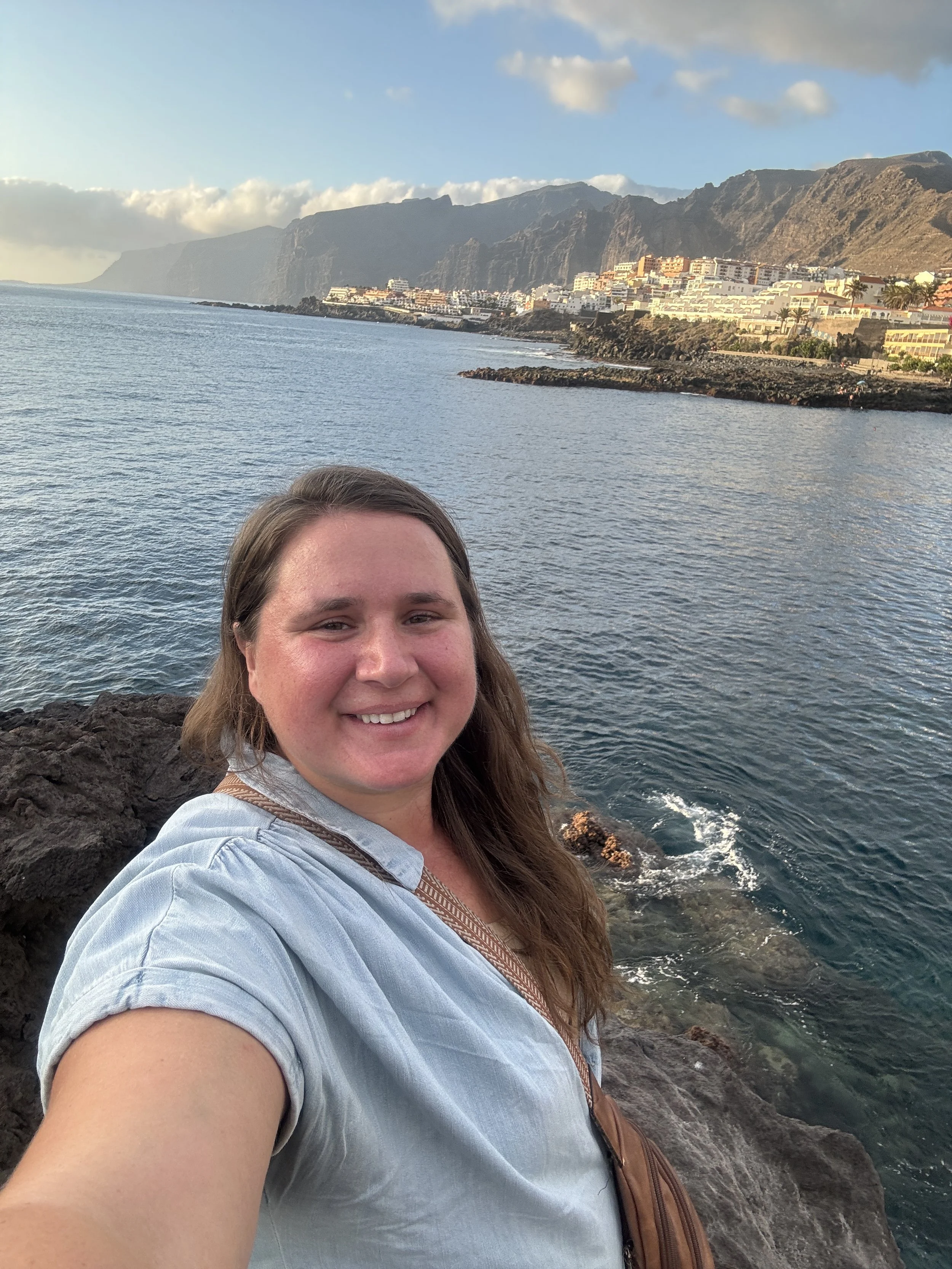
Hi, I’m Dr. Annie Krajewski. I’ve been traveling the world and running my private practice full-time for 3+ years!
Figuring out how to become a traveling psychiatrist might feel like you're trying to solve a puzzle with pieces that don't quite fit.
If you want to see patients remotely, build a schedule around your life, and maybe even work from a different country while maintaining a full psychiatric caseload, it's definitely possible.
That said, psychiatry comes with complexities that other mental health professions don't have to face. But that's not a reason to give up on the idea! It just means that you have to plan everything carefully.
Personally, I built a location-independent US-based private therapy practice while living in Morocco, Thailand, and Indonesia. Psychiatry has additional steps to navigate, but the foundation is the same.
Here's what you need to know!
What does it mean to become a "traveling psychiatrist"?
The traditional traveling psychiatrist model
If you want to become a traveling psychiatrist, the traditional route is locum tenens work.
As a locum tenens psychiatrist, you fill temporary staffing gaps at hospitals, clinics, community mental health centers, or other facilities that need psychiatric coverage. A staffing agency matches you with placements, handles your contracts, and often covers travel and housing.
This can work well for you if you're looking for variety without the responsibility of running your own business. You'll do the clinical work and move on to the next placement.
The trade-off is that your schedule and location are largely determined by where the work is, not where you want to be. You're traveling for the job rather than creating a life that happens to include work.
Learn more about my experience with therapist burnout.
Building a private practice you can run from anywhere
The other path is building a telehealth-based private practice that you own and operate, and that you can run from anywhere in the world.
For psychiatrists, this means:
Seeing US-based patients via telehealth in states where you hold a medical license
Managing medication remotely, where state rules allow, and
Building a practice around the schedule and lifestyle you want
The complexity specific to psychiatry comes down to prescribing authority, DEA registration requirements, and certain medications (especially controlled substances).
These are all figureable, but they require more upfront research and planning.
That said, the payoff is huge. Psychiatrists typically command higher rates than other mental health providers, which means your income can support a comfortable life abroad even with a smaller caseload.
And once your systems are set up, the day-to-day of running a remote psychiatric practice looks a lot like any other telehealth practice—log on, see patients, log off, and go live your life!
7 steps to becoming a traveling psychiatrist
1. Understand your state licensing requirements as a psychiatrist
Before you do anything else, you need to understand what each state requires for you to practice psychiatry and prescribe medication via telehealth.
Most states require you to hold a medical license in the state where your patient is located during the session, and not where you're physically located.
But beyond the medical license, you'll also need to think about:
DEA registration: You need a separate DEA registration for each state where you prescribe controlled substances.
Controlled substance prescribing rules: Some states require an in-person evaluation before you can prescribe controlled substances via telehealth.
State-specific telehealth standards: Some states have extra practice requirements for psychiatrists seeing patients via telehealth.
This is an area where consulting with a healthcare attorney who specializes in telehealth is worth the investment!
2. Get licensed in multiple states
The more states you're licensed in, the more flexibility you have both in building your patient base and in managing time zones when you're living abroad.
The Interstate Medical Licensure Compact (IMLC) can be a fast way to add licenses. If your primary state of residence participates in the compact, you can apply for licenses in multiple member states through a streamlined process rather than going through each state individually.
It's still a process, but it's faster than the traditional route.
When deciding which states to prioritize, think about:
Time zones: For example, if you're planning to live in Europe, the East Coast states create more manageable scheduling than the West Coast ones.
Patient demand: Some states have psychiatrist shortages, which can make it easier to build a caseload quickly.
Telehealth friendliness: Some states have clearer, more permissive telehealth rules for psychiatrists than others.
Learn more about legally becoming a travel therapist.
3. Decide what services you'll offer remotely
Not everything a psychiatrist does translates seamlessly to telehealth, and getting clear on your services can save you a lot of headaches.
The main thing to work through is prescribing. Medication management via telehealth is widely accepted and practiced, but the rules around some medications, such as controlled substances, are more complex.
4. Set up your business structure
Even if you're living abroad, your practice is a US-based business and needs to be structured as one.
The most common options are:
Sole proprietorship: Simple to set up, but no liability protection and higher self-employment taxes.
LLC: Provides liability protection and more flexibility in how you're taxed.
S-Corp: Can reduce self-employment taxes once your income reaches a certain level, but it adds payroll and bookkeeping steps.
Psychiatrists typically earn higher rates than other mental health providers, which often makes the S-Corp election worth exploring sooner rather than later. A CPA can help you figure this out!
Learn more about how to file taxes as a digital nomad therapist.
5. Sort out your malpractice insurance
Malpractice insurance for psychiatrists is more complex (and often more expensive!) than for other mental health providers. Add telehealth and international provider location to the mix, and you need to be very specific about what you're asking for when you shop for coverage.
When evaluating policies, ask:
Does the policy cover telehealth services?
Does coverage apply when you're located outside the US while seeing US-based patients?
Are there any exclusions related to prescribing via telehealth?
Does the policy cover all the states where you're licensed?
You will likely have to shop around before you find the right policy, but the freedom that comes with running your own private practice and traveling is worth it!
6. Build your HIPAA-compliant tech stack
Your technology needs to be HIPAA-compliant and work reliably from wherever you're located.
The core tools are:
EHR: Jane App supports international login and complies with HIPAA and international data privacy laws, including GDPR. Use code DIGITALNOMAD1MO for one month free!
VPN: Proton VPN for Business allows you to sign a BAA, which makes it HIPAA compliant.
Email and document storage: Google Workspace with a signed BAA, plus Paubox for end-to-end email encryption, are my recommended tools.
Phone and texting: Spruce Health is HIPAA compliant and a great tool for all patient communication.
Video platform: Zoom for Healthcare, with a signed BAA, is the most reliable option for low-bandwidth connections abroad.
Psychiatrists also need to consider e-prescribing platforms. Make sure any e-prescribing tool you use is HIPAA compliant and works from an international location.
7. Research visa requirements
Think about where you want to live and for how long.
Short-term travel: If you're moving between countries and not staying anywhere longer than two to three months, you may not need a visa at all (as an American).
Long-term stays in one country: If you want to base yourself somewhere for six months or more, you'll likely need a long-term visa, such as a digital nomad visa.
Work visas: Traditional work visas typically require employer sponsorship and aren't applicable if you're running your own US-based practice.
If you're new to living abroad and want to ease into it, countries like Mexico, Colombia, or Thailand tend to be more straightforward for first-time digital nomad psychiatrists!
Learn more about the best countries for digital nomad therapists.
Get my 8-week checklist to build a US-based private practice
There's a lot more to building a location-independent practice than any single blog post can cover. If you want a week-by-week plan that walks you through the most important steps, download my free guide: Your 8-Week Checklist to Become a Digital Nomad Therapist!
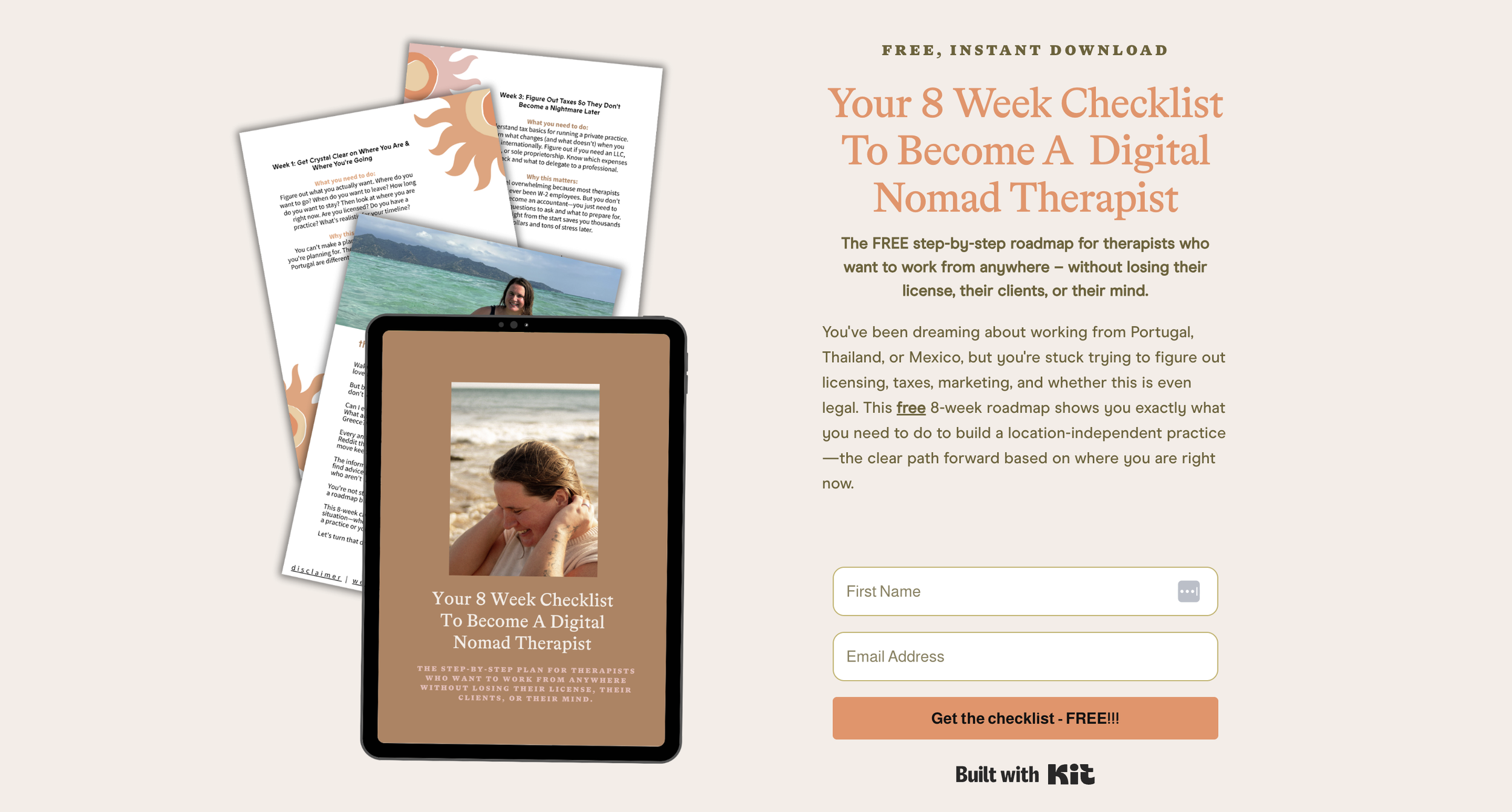
Your 8 Week Checklist to Become a Digital Nomad Therapist.
FAQs
Can psychiatrists prescribe medication via telehealth?
Yes, in many states. That said, the rules vary and often depend on what you're prescribing. Many non-controlled medications can be prescribed via telehealth without an in-person evaluation in many states, but controlled substances are more complicated.
Do I need a DEA registration in every state where I practice?
Traditionally, yes, a separate DEA registration has been required for each state where you prescribe controlled substances. But this is an area of active regulatory change, and the rules around telemedicine prescribing have been evolving. Rather than relying on general information, check current DEA guidance and consult with a healthcare attorney who specializes in telehealth!
Can I prescribe to patients in another country as a traveling psychiatrist?
No. Your prescribing authority is limited to US-based patients in states where you hold a valid medical license. Living or traveling abroad doesn't change or expand your scope of practice!
Looking for more answers on how to become a traveling psychiatrist?
Building a location-independent psychiatric practice is absolutely possible! But there's a lot to figure out, and it's normal to have questions at every stage of the process.
Here are a few ways to keep learning and stay connected:
Subscribe on YouTube for videos on building a remote practice and living abroad as a mental health professional
Connect on Instagram to join a growing community of therapists and psychiatrists creating location-independent careers
Get in touch if you have questions, because I'd love to help you figure out your next step!
The logistics are figureable, and the life you're imagining is within reach!