10 Best Countries for Digital Nomad Therapists Right Now
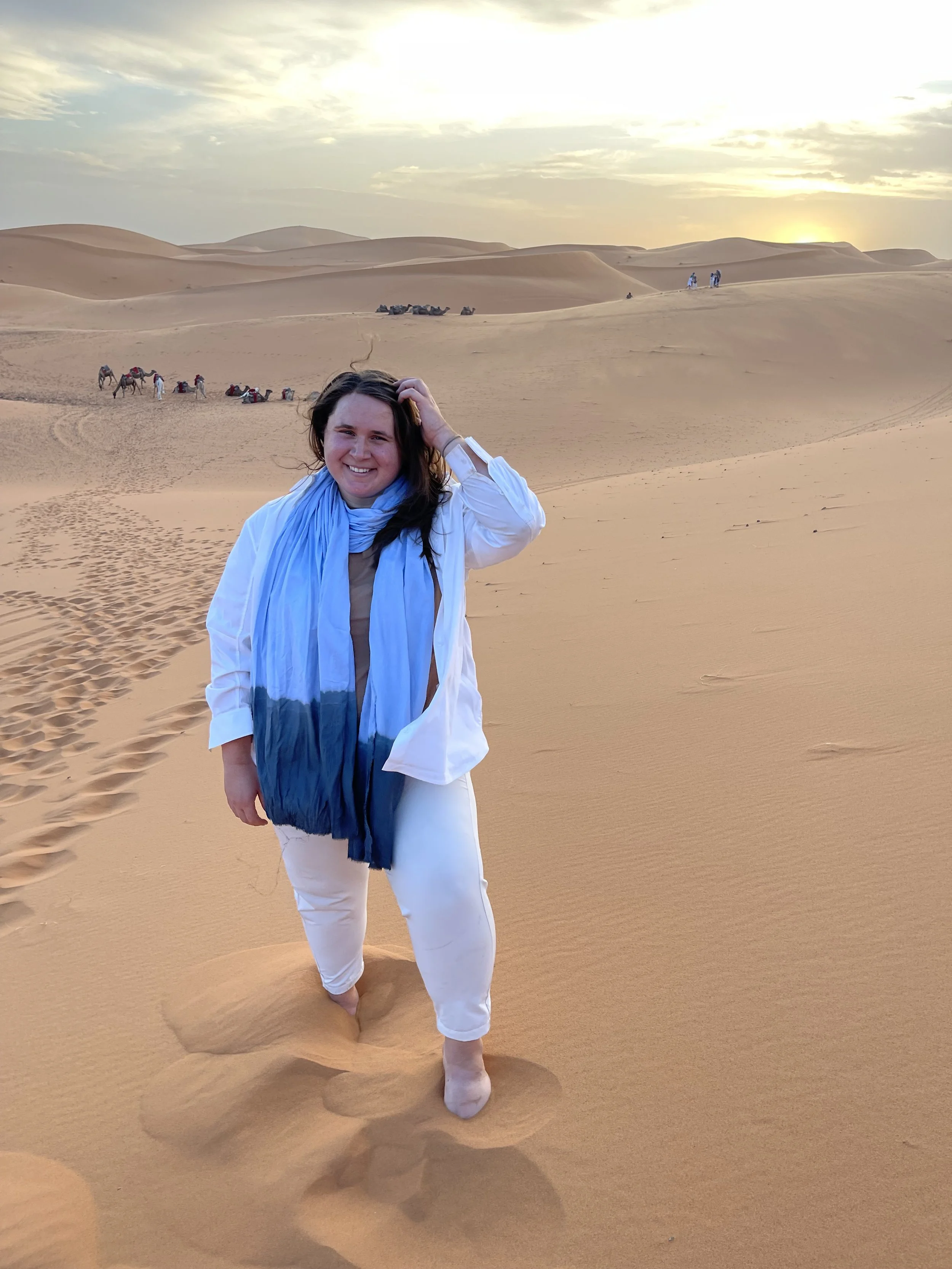
Hi, I’m Dr. Annie Krajewski. I’ve been traveling the world and running my private practice full-time for 3+ years!
When trying to choose the best country for digital nomad therapists, you need to weigh many different factors at once, such as cost of living, lifestyle, time zone alignment, visas, internet reliability, and more.
It's both exciting and confusing! So, how do you decide on where to go next?
I've been running my US-based private practice for 3+ years while living in Morocco, Thailand, Indonesia, and a few other countries. I've researched visa requirements, internet speeds, healthcare systems...you name it!
So, here's my list of the 10 best countries for digital nomad therapists, with practical insights you can use to make your decision.
What is a digital nomad therapist?
A digital nomad therapist is a licensed mental health professional who runs a remote therapy practice while living or traveling internationally. You see clients online and build a life that isn't tied to a single office or city.
The digital nomad therapist community is growing fast. More and more therapists are discovering that they can maintain a full caseload, provide high-quality care, and live in places they've always dreamed about visiting.
Just take a look at this typical day in the life while I'm living abroad!
There are a couple of different ways for therapists to work remotely, but what I'm talking about here is running a US-based private practice while living or traveling outside the US.
The benefits are amazing. You get to:
See the world
Enjoy a lower cost of living
Design your schedule around your life instead of the other way around
Create a successful private practice that travels with you wherever you go
In 2023, research showed that 89% of psychologists used telehealth, and 67% worked in a hybrid practice. These numbers have likely grown even more in 2026 and beyond!
Now, "telehealth" doesn't necessarily mean living abroad, but if that's what you want, it's definitely possible, realistic, and ethical.
If you're considering nomadic life as a therapist, I have a few guides that'll help:
Choosing a country is one of the most exciting parts of planning your move, but it can also feel overwhelming. There are dozens of countries that welcome remote workers, and each one has different advantages depending on what you prioritize.
Here's how I think through it:
How to choose the best country as a digital nomad therapist
There's no single "best" country for digital nomad therapists. It heavily depends on what matters most in your daily life and how you want your therapy practice to operate!
But here are the most important factors (IMO) to think through:
Time zones: How many hours ahead or behind are you willing to work to accommodate your US clients?
Visa options: Does the country offer a digital nomad visa, or will you need to visa-hop every few months?
Cost of living: Can you maintain or improve your quality of life on your current income?
Internet reliability: Does the country have fast, stable internet in the cities or towns where you'd want to live?
Healthcare access: Is quality healthcare available and affordable, either through insurance or out-of-pocket?
Lifestyle fit: Does the culture, climate, food, and pace of life align with what you enjoy?
Community: Are there other expats, digital nomads, or English-speaking communities where you'd feel connected? Is this something that matters to you?
No country will check every box perfectly, but understanding your priorities helps you narrow down your options.
For example, if time zones matter most, you'll likely lean toward Latin America instead of Europe or Asia. Or if visa simplicity is your top concern, countries with digital nomad visas rise to the top.
Learn more about the factors to consider when choosing a country to work from as a travel therapist.
10 best countries for digital nomad therapists
1. Thailand
Lifestyle: Beautiful beaches, affordable street food, and a laid-back pace of life
Cost of living: For a single person, $609 per month (excluding rent)
Visa options: US citizens can stay in Thailand visa-free for 60 days, extendable to 90 days. For longer stays, Thailand's Digital Nomad Visa (DTV) lets you stay for up to 180 days at a time, with multiple entries valid for five years.
Thailand has a special place in my story because I gave birth to my daughter there! The healthcare was excellent and affordable, especially compared to the US. Cities like Chiang Mai, Bangkok, and Koh Samui have thriving digital nomad communities with reliable internet connections.
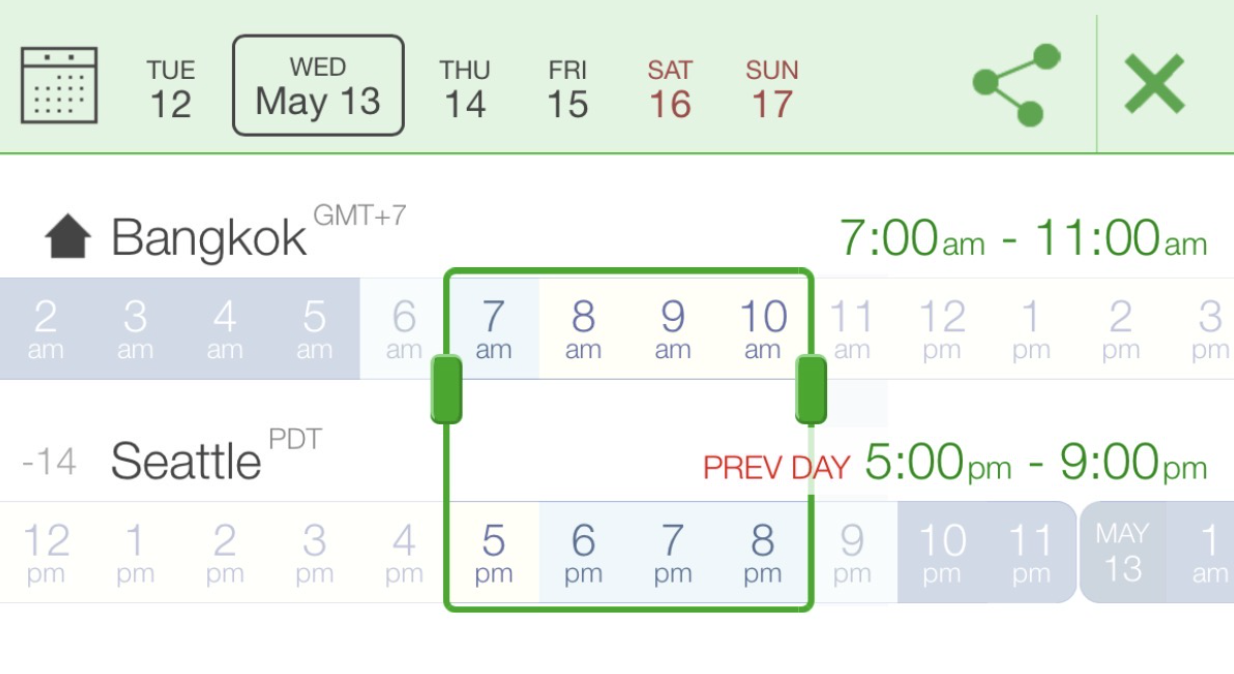
Thailand to West Coast.
The time zone is challenging because you're 12 hours ahead of EST and will need to work very early mornings or late nights to see US clients. But the low cost of living and welcoming culture make Thailand worth it for many digital nomad therapists!
Also, if your clients are based on the West Coast, it’s a much better time zone situation.
2. Portugal
Lifestyle: Charming coastal cities, amazing food and wine, and many fellow expats in Lisbon and Porto
Cost of living: For a single person, $793 per month (excluding rent)
Visa options: Portugal's Digital Nomad Visa allows remote workers to live there for up to one year, with the option to renew.
Lisbon and Porto have some of the strongest expat communities in Europe (and potentially the world!). There are also TONS of therapists in Portugal!
The culture is warm, and the lifestyle feels relaxed, but you don't have to sacrifice access to any modern amenities. The time zone (5 hours ahead of EST) also makes scheduling with US clients manageable, as long as you're willing to work some evenings.
3. Morocco
Lifestyle: Colorful markets, affordable living, and African, Arab, + European influences
Cost of living: For a single person, $503 per month (excluding rent)
Visa options: US citizens can stay in Morocco visa-free for up to 90 days. There's no official digital nomad visa yet, but many remote workers do visa runs to Spain or extend their stays through residency permits if they plan to stay long-term.
Cities like Marrakech, Casablanca, and Tangier have growing expat communities, and a cost of living that stretches your income far. I’ve lived there for over a year while running my practice!
Morocco naturally holds a special place in my heart because I met my husband there! If you want to live in a place that's vibrant and full of life, it's perfect. It's also only 5-6 hours ahead of EST, so your schedule aligns well with East Coast hours.
A fun fact about Morocco is that it was colonized by France, so many people speak French as their second language. More and more people are learning English, too. That said, if you’re in the non-touristy parts, you may struggle with some language barrier!
4. Mexico
Lifestyle: Warm weather, incredible food, and easy weekend beach trips
Cost of living: For a single person, $728 per month (excluding rent)
Visa options: Mexico has a Temporary Resident Visa for digital nomads, which allows you to stay for up to four years.
Mexico is one of the best options for digital nomad therapists because the time zones align perfectly with US clients. Depending on where you are in Mexico, you're either on Central or Mountain time, which means no late-night sessions or early-morning wake-up calls.
Cities like Mexico City, Puerto Escondido, Playa del Carmen, Oaxaca, and Puerto Vallarta have many nomads and reliable internet.
5. Colombia
Lifestyle: Lively cities, incredible coffee, and friendly locals
Cost of living: For a single person, $559 per month (excluding rent)
Visa options: Colombia allows US citizens to stay visa-free for up to 90 days, with the option to extend for another 90 days. For longer stays, the Digital Nomad Visa (Visa V) lets you live in Colombia for up to two years.
Medellín is a well-known digital nomad hub, and the cost of living allows you to live comfortably. The time zone (EST or one hour behind, depending on the season) makes scheduling with US clients incredibly simple.
Colombia has changed a lot in recent years, and cities like Medellín and Bogotá are safe, especially in the neighborhoods where expats live. Plus, the coffee is some of the best in the world!
6. Georgia
Lifestyle: Off the beaten path! Most people don't even know this country exists (yes, the country, not the state!)
Cost of living: For a single person, $589 per month (excluding rent)
Visa options: Georgia has one of the most generous visa policies in the world for US citizens! You can stay visa-free for up to one year. There's no digital nomad visa, but you don't really need one.
Georgia is a hidden gem! Tbilisi is stunning, and the locals are incredibly friendly. Also, the food is amazing, and you must try khachapuri, a traditional cheese-filled bread.
The time zone is 8-9 hours ahead of EST, so you'll be working evenings or late into the night to catch your US clients. But the trade-off is worth it considering that meals out cost a few dollars, and you'll feel like you're living somewhere few therapists have even thought to explore.
7. Indonesia
Lifestyle: Tropical beaches and fun expat life
Cost of living: For a single person, $417 per month (excluding rent)
Visa options: Indonesia has a few options for remote workers, including the B211A Visit Visa and the E33G Remote Worker Visa.
I worked from Bali, Indonesia, and it's one of those places that completely changes how you think about life! Bali is the main hub, and Canggu and Ubud are packed with cute coffee shops, yoga studios, and other digital nomads.
Bali has changed a lot over the years, and some people say that it’s become too crowded and touristic. There are, for sure, more people visiting, but the upside is that it helps with work reliability because the infrastructure has been renovated to accommodate digital nomads, who need a stable internet connection to work.
Also, Lombok is growing in popularity, so if a busy city isn’t your vibe, it might be worth it to check out Lombok instead of Bali!
The major challenge is the time zone because you're 12-13 hours ahead of EST, which means very early mornings or very late nights for client sessions.
8. Spain
Lifestyle: Tapas, siestas, and a culture that values enjoying life as much as working hard
Cost of living: For a single person, $842 per month (excluding rent)
Visa options: Spain's Digital Nomad Visa allows remote workers to stay for up to one year, renewable for up to five years.
Spain is more expensive than other countries on this list, but for many travel therapists, the lifestyle is worth it. Barcelona, Madrid, Malaga, and Valencia are full of history and incredible food.
You also get easy access to the rest of Europe and can hop on a cheap flight to Paris, Lisbon, or Rome. You're 6 hours ahead of EST, so expect to work evenings if you're seeing East Coast clients, which isn't the worst time difference.
This is a popular country for digital nomad families with children because the education system in Spain is very good!
9. Vietnam
Lifestyle: Motorbikes everywhere, incredible street food, and a fast-paced energy in the cities
Cost of living: For a single person, $430 per month (excluding rent)
Visa options: Vietnam has a 90-day e-visa for US citizens, which you can renew by leaving the country and re-entering. No official digital nomad visa yet.
Vietnam is one of the most affordable countries in Southeast Asia, and cities like Da Nang, Hanoi, and Ho Chi Minh City have busy digital nomad scenes. Some of my favorite things about Vietnam are the entrepreneurial spirit and the fact that you can eat incredible meals for just a couple of dollars!
The time zone is tough (you're 12 hours ahead of EST), but the internet is fast.
10. Albania
Lifestyle: Feels like Europe's best-kept secret
Cost of living: For a single person, $714 per month (excluding rent)
Visa options: US citizens can stay in Albania visa-free for up to one year, which makes it one of the easiest countries for long-term stays.
Albania is still flying under the radar, which means fewer crowds. The internet is improving quickly, especially in cities, and you can explore both beaches and mountains. The cost of living is much lower than in the rest of Western Europe, but there are still plenty of modern conveniences.
You're 6 hours ahead of EST, so you'll work evenings to accommodate US clients, but it's not the craziest time difference.
Is digital nomad life actually possible as a therapist?
Yes! I've been running my US-based private practice while living abroad for 3+ years, and I'm not the only one. The digital nomad lifestyle is possible and realistic for therapists.
The logistics, such as visas, licensing rules, malpractice insurance, tech setup, and taxes, can feel overwhelming at first. But every single one of these things is figureable. With research, planning, and a healthy dose of determination, you can make it work one step at a time!
Because the bottom line is, you deserve a full life rich with experiences. You don't have to choose between your career and the places you want to see, the cultures you want to experience, or the lifestyle you've been dreaming about. You can have both!
Get my 8-week roadmap to become a digital nomad therapist
Building a location-independent practice takes planning, but you don't have to figure it out alone. My free guide breaks down everything you need to know to take your practice abroad, including legal requirements, tax considerations, clinical setup, and more.
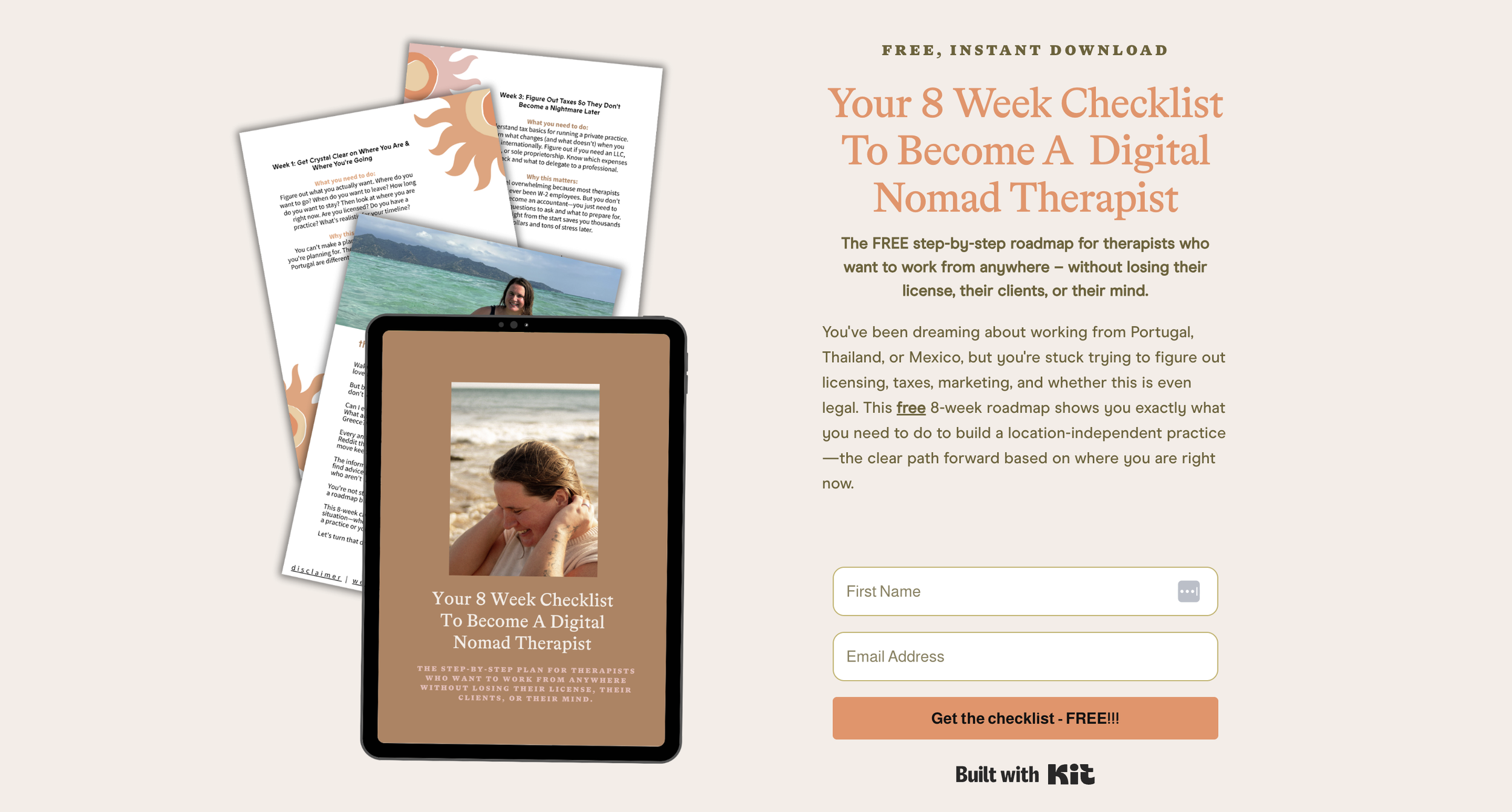
Your 8 Week Checklist to Become a Digital Nomad Therapist.
Download Your 8-Week Checklist to Become a Digital Nomad Therapist and follow the week-by-week plan to set up your remote practice!
FAQs
Can I legally provide therapy while living in another country?
Yes, as long as you're seeing clients in states where you hold a valid license! Your license needs to match where your clients are physically located during sessions. For most states, it's not relevant where you are located. Your visa status in your host country doesn't (usually) affect your ability to work remotely for US clients, either. You're still running an American business, just from a different location.
Do I need to get licensed in the country where I'm living?
No, not if you're seeing US-based clients. You're not treating local clients in your host country, so you typically don't need a local license. Your US license covers you for the work you're doing with US clients. That said, always verify with your state licensing board, as rules can vary by state.
Will my malpractice insurance cover me internationally?
It depends on your policy. Not all malpractice insurance automatically covers therapists practicing from outside the US, but some providers do offer international coverage. Contact your insurance company and ask whether your policy covers you when you're located abroad while seeing US clients. You may have to pay a higher premium or, worst-case scenario, switch providers—but there's always a solution!
Want to become a digital nomad therapist? Join the Nomad Practice Accelerator!
Choosing the best country for digital nomad therapists is just one piece of the puzzle.
If you want to build a location-independent, freedom-filled private practice, there are plenty of other logistics to think through, like:
Which states should you get licensed in before you leave?
How do you handle time zones?
What do you tell your current clients?
How do you stay HIPAA-compliant?
What tech tools do you need to work reliably from anywhere?
How do you market your private practice to attract US-based clients?
What about language barriers?
If you want answers to these questions and more...
The Out of Office Therapist Village is a 12-month membership that walks you through all of this! You'll get step-by-step guidance, live support, and a community of therapists building the same lifestyle.