Travel Therapist Schedule Tips: How to Work Across Time Zones Without Burning Out
If you’re a therapist who loves to travel, you’ve probably asked yourself a version of this question: How do I maintain a U.S.-based private practice while living in a completely different time zone?
The idea of becoming a travel therapist is exciting—but time zones are often the biggest mental and logistical barrier. I know because I’ve lived it. I run a fully virtual private practice with U.S.-based clients while traveling internationally, and managing time differences has been one of the most important skills I’ve had to learn.
Over time, I’ve learned what actually supports scheduling, consistency, and sustainability as a travel therapist—and I’ve also seen how easy it is to underestimate the impact of time zones.
the reality of being a travel therapist across time zones
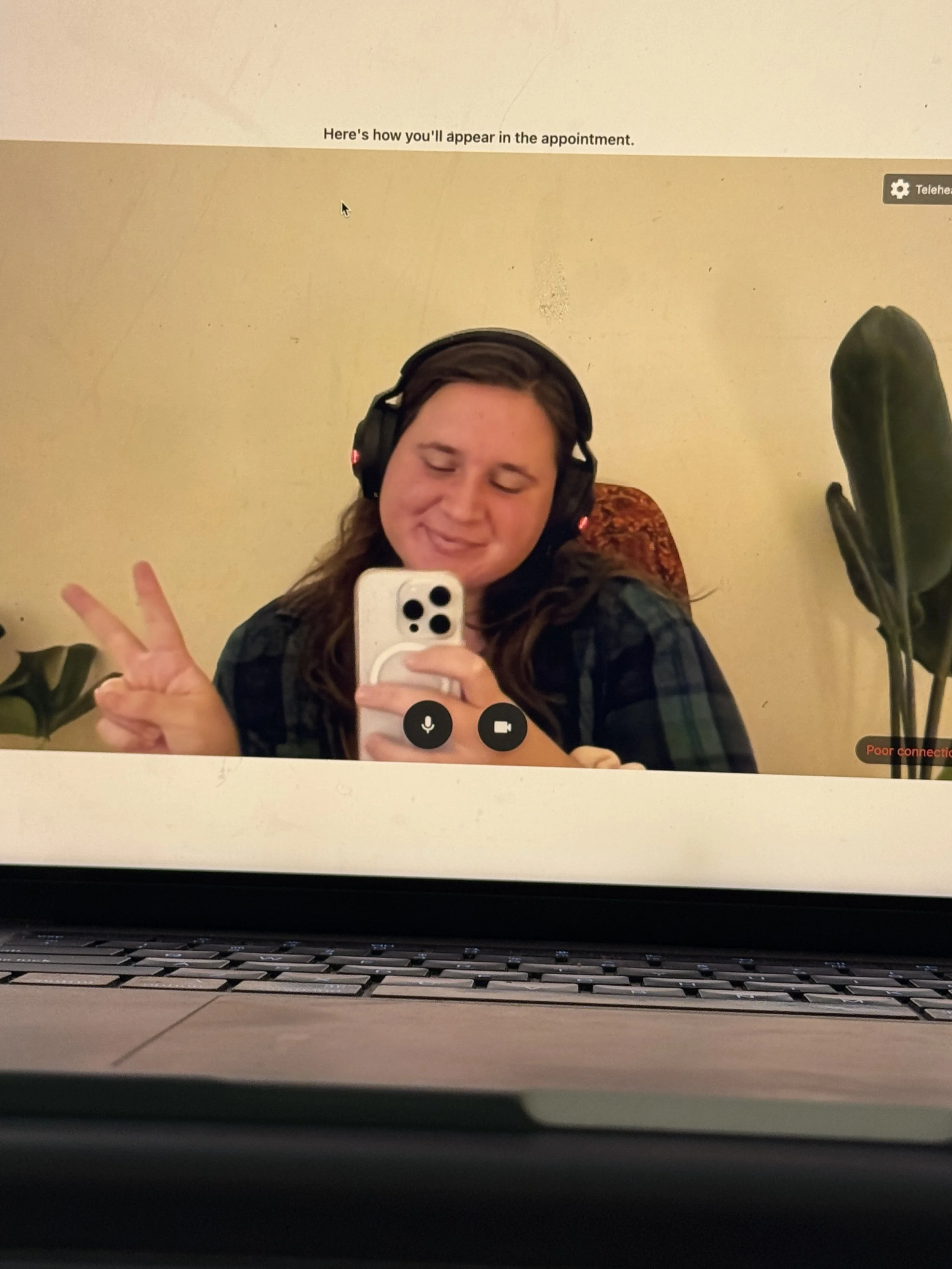
Social media makes it look easy: laptop open, beautiful view, flexible days. What you don’t always see is the behind-the-scenes planning required to make this lifestyle ethical, stable, and actually livable.
As a travel therapist, your schedule doesn’t just affect you—it affects your clients. Therapy relies on consistency, predictability, and trust. When time zones are involved, those foundations need to be even more intentional.
The good news? You don’t have to give up your practice—or your desire to travel. You just need a thoughtful approach.
tip #1: map out time zones before you travel
One of the most helpful things I did early on was listing out every place I could realistically imagine traveling to. Not as a rigid plan, but as a way to understand time zone patterns.
Once you see how different regions align (or don’t) with U.S. time zones, you can make more informed decisions about where working as a travel therapist makes sense—and where it might be better to travel purely for vacation.
Some time zones allow for early mornings or late evenings without completely flipping your life upside down. Others require schedules that just aren’t sustainable long-term. Seeing this in advance prevents burnout and frustration later.
tip #2: minimize how often you change your schedule
This is one of the most underestimated challenges of being a travel therapist.
Constantly shifting session times can:
Create confusion for you
Increase emotional activation for certain clients
Add unnecessary cognitive load to an already complex lifestyle
Even if clients say they’re flexible, frequent changes can impact the therapeutic container. I’ve found it much more sustainable to limit major schedule changes to no more than once per quarter, when possible.
Consistency isn’t about rigidity—it’s about safety. For your clients and for your nervous system.
the nervous system cost of constant time zone switching
Traveling while working is very different from traveling on vacation. When your workday is anchored to one time zone while your body is living in another, things can get confusing fast.
As a travel therapist, I’ve learned that jumping between vastly different time zones in a short period of time isn’t just exhausting—it can be dysregulating. Sleep, focus, and emotional resilience all take a hit.
Grouping destinations with similar time zones and staying in one region longer has made a huge difference in my ability to stay present and grounded in my work.
tip #3: anchor your tech to your clients’ time zone
This is a small change that makes a big impact.
I keep my primary work device set to the same time zone as my clients. This reduces mental math, prevents scheduling errors, and keeps my session flow intuitive. My phone stays on local time, while my work systems stay aligned with my practice.
For a travel therapist, this kind of clarity matters—especially when you’re tired, adjusting to a new environment, or working unconventional hours.
a day in the life of a travel therapist (behind the scenes)
My days don’t look like a traditional 9–5. Some mornings start very early. Some evenings run late. Between sessions, I’m doing documentation, admin work, scheduling, and all the regular responsibilities that come with owning a private practice.
When I’m in session, I’m fully present as a therapist—not multitasking, not sightseeing, not “half-working.” Travel changes the setting, not the responsibility.
After work, recovery is essential. Rest, movement, and low-stimulation activities aren’t optional when you’re holding emotional space across time zones.
Want to see what this has looked like for me? Check out a day in my life in Morocco and another in Thailand!
is the travel therapist lifestyle worth it?
There are trade-offs. Early mornings. Late nights. Extra admin. Schedule discipline.
But there are also benefits I never want to give up:
More autonomy over my time
Less burnout than traditional in-person practice
A deeper sense of alignment between my work and my life
Being a travel therapist has shown me that freedom doesn’t mean a lack of structure—it means creating structure that supports who you actually are.
final thoughts
If you’re dreaming about becoming a travel therapist, time zones don’t have to be the thing that stops you. With planning, consistency, and realistic expectations, it’s absolutely possible to maintain a thriving U.S.-based practice while living abroad.
You don’t need to have every detail figured out today. You just need to start asking the right questions—and be honest about what kind of schedule you can sustain long-term.
A grounded, ethical, fulfilling life as a travel therapist is possible. And it can look a lot more balanced than you might expect.