How to Become a Remote Therapist in 10 Steps
Learning how to become a remote therapist might feel like navigating a maze, but I promise the path exists! More and more therapists are choosing to see clients virtually, whether it's from home, while traveling, or even as they’re living in another country.
The shift to virtual therapy can give you more freedom, fulfillment, and often a higher earning potential. But the transition also brings up approximately a million big questions.
Can I legally see clients from another state? How do I find clients when I'm not physically present in one location? What about taxes?!
As a digital nomad therapist who's built a full private practice while living and working from Morocco, Thailand, and Indonesia, I hear these questions a lot! So, here's a guide that walks you through the practical steps to build a remote therapy practice that works for your life.
What is a remote therapist?
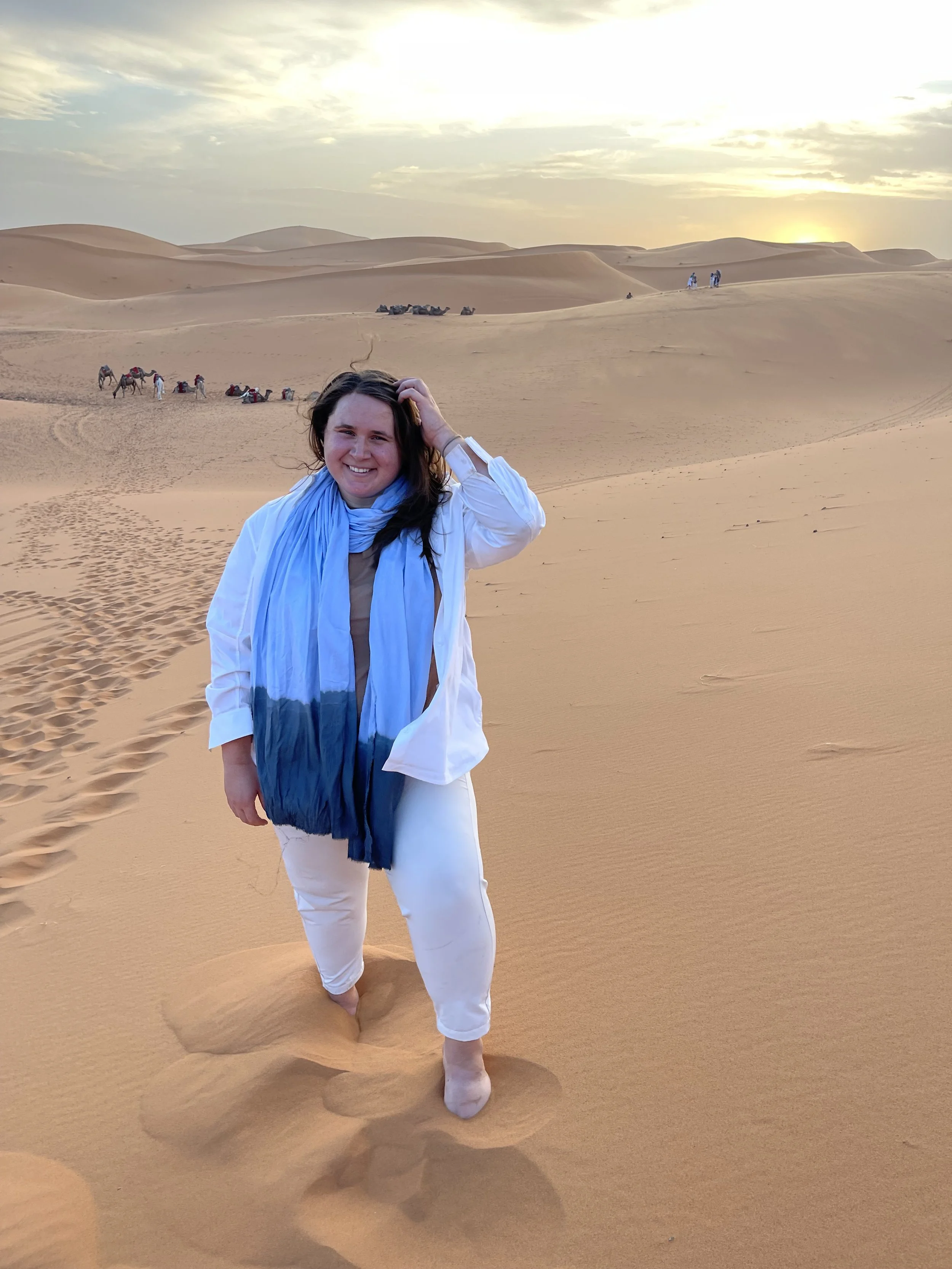
Hi, I’m Annie! A remote therapist of 3+ years who’s been traveling the world!
A remote therapist provides therapy services online. Sessions happen through secure video platforms, which allow you to work from pretty much wherever you have reliable internet (as long as you have the right, compliant setup—more on this later!).
There are so many benefits to becoming a remote therapist:
Flexible scheduling
Location freedom
No commute
Lower overhead costs
Often, the ability to charge higher rates because you can reach clients beyond your immediate area
The timing, quite frankly, has never been better for therapists.
Employment of mental health counselors is projected to grow a whopping 18% from 2022 to 2032, according to the US Bureau of Labor Statistics, which is far faster than the average for all occupations. Substance abuse, behavioral disorder, and marriage and family therapists are especially needed.
Therapists are in high demand, and going remote expands your reach. You can serve clients across state lines (with the right licensure), build a practice around your ideal niche, and design a schedule that supports the life you want!
Is becoming a remote therapist actually realistic?
Yes! As a travel therapist, I get asked this constantly, and I wish I could shout it from every therapist forum and supervision group: building a remote therapy practice is 10000% possible.
I've built mine while living in Morocco, Thailand, and Indonesia. I literally got married, had a baby, and maintained a full US-based caseload the entire time, completely private pay.
I saw this post on Reddit recently:
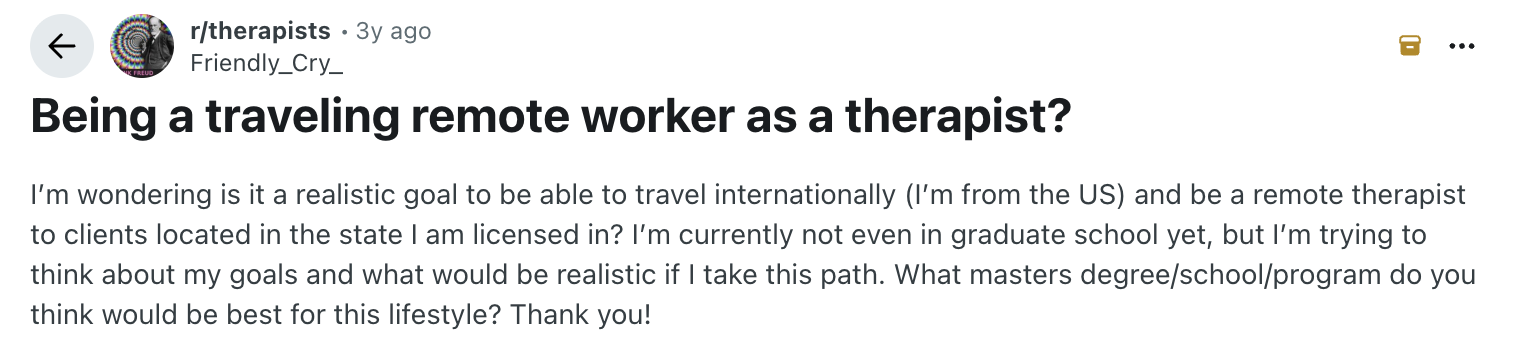
Can you become a remote therapist?!
Therapists often wonder if they can work remotely while traveling, if it's ethical, if it's actually practically possible, and if it's even allowed.
The short answer: Yes, with the right structure in place
The longer answer: Yes, but you need to understand licensing rules, set up your systems correctly, and approach it with intention
But none of that ^ makes it unrealistic! It just means that you need a good plan to build a successful practice that allows you to work from pretty much anywhere in the US or even the world!
You deserve a life that feels good and interesting, and that's a hill I'm willing to die on.
If you're experiencing therapist burnout and dreaming about building a more sustainable practice that allows you to do the things you've always wanted to do, remote work can be the bridge between where you are now and the life you've been postponing.
And yes, it IS practical and realistic.
How to become a remote mental health therapist: 10 steps
There's plenty of information out there about remote work in general, and lots of advice on building a traditional private practice in the US. But there's very little that specifically addresses how to build a remote private practice as a licensed therapist.
Here are the steps to make it happen!
1. Clarify your why and your vision
Before you start researching licensing boards or comparing EHR platforms, get clear on why you want to become a remote therapist.
For example, maybe:
You don't want to pay for office space or waste hours commuting
You live in a rural area but want to work with clients in bigger cities
Your ideal niche doesn't exist where you live
You need flexibility because of family, travel, or your partner's job
You want access to higher-paying clients who aren't in your area
You want to travel without starting your practice over every time you move
For me personally, it was travel. I was burned out and tired of organizing my entire life around two weeks of vacation per year. I wanted to build a practice—and a life—that didn't require constant escape.
Whatever your work-life goals are, being crystal clear on your why will keep you motivated when the logistics start feeling like a little too much.
Everything is figureable, but sometimes there isn't a straightforward answer right away. Reminding yourself why you're doing it in the first place will help you keep going!
2. Research the legal and licensing requirements

Doing ALL the research becomes worth it once this is your afternoon view!
This is where many therapists who want to go remote get stuck. It's a step that does require a hefty amount of research, but it often ends up being less complicated than it seems at first glance.
Start with your current state license
Check your state's licensure rules about practicing from another location. Most states care about where your clients are located, not where you are physically sitting during the session. But that's not universal.
Don't assume
Many therapists assume that as long as clients are in a state where they're licensed, they can work from anywhere in the world. Sometimes that's true, but sometimes it's not.
Some licensing boards have explicit rules restricting where the provider can be located during sessions. Some don't address this question at all. In this case, you'll need to:
Review your state's telehealth laws and look for any language about provider location
If the regulations don't mention it or you're unsure, email your licensing board
Explain your situation and ask questions
Document the conversation
Most of the time, you'll find that you can practice from anywhere as long as your clients are in states where you're licensed. But verifying this upfront protects you from problems down the road.
If your state restricts provider location:
One option is getting licensed in additional states that have more flexible rules. It's a process, but for therapists serious about building a remote practice, this can be a smart investment.
Learn more about how to legally become a travel therapist.
3. Choose your business structure
Your business structure affects your taxes, liability protection, and administrative workload. The three most common options for therapists are:
Sole proprietorship: simple to set up, but offers no liability protection and higher self-employment taxes
LLC: provides liability protection and can be taxed as an S-Corp for potential tax savings
S-Corp: reduces self-employment taxes once you're earning enough, but requires more bookkeeping and payroll
If you're just starting out, an LLC is usually a good idea. As your income grows, an S-Corp can save you money on taxes, but it also adds complexity.
If you're living abroad, make sure to maintain a US business address. Your practice is US-based, even if you're physically located somewhere else. You can use a registered agent service or a trusted contact's address for official business correspondence.
4. Get liability insurance with remote coverage
Not all malpractice insurance policies cover telehealth, and there are fewer options if you're practicing from outside the US, but they do exist. You should:
Verify that your policy explicitly covers telehealth services
Confirm that coverage extends to your physical location, especially if you plan to work internationally
Ask about any exclusions or additional requirements for remote practices
Don't forget to update your policy as your practice evolves! If you add new states or change where you're working from, tell your insurance provider. It's better to pay a slightly higher premium than to find out you're uninsured after something goes wrong.
5. Set up your tech stack
Naturally, getting all of your tech tools right is one of the most important parts of becoming an online therapist, since you'll be seeing clients virtually. Make sure that your setup includes:
EHR platform: Choose one that supports remote work and allows international login access—Jane is my EHR of choice for therapists abroad
Video platform: I personally use Zoom for its low bandwidth requirements and noise isolation features that filter out background sounds
VPN and security: Set up a VPN to encrypt your connection and maintain HIPAA compliance, especially on public or hotel wifi
Payment processing: Confirm that your payment processor works from wherever you'll be located
US phone number: Maintain a US-based phone number even if you're out of the country
Setting this up takes some time upfront, and you'll probably need to test a few things before you find what works best. But once your tech stack is running smoothly, you'll have the foundation for a practice that can operate from anywhere without constant troubleshooting or security concerns.
6. Create a professional workspace
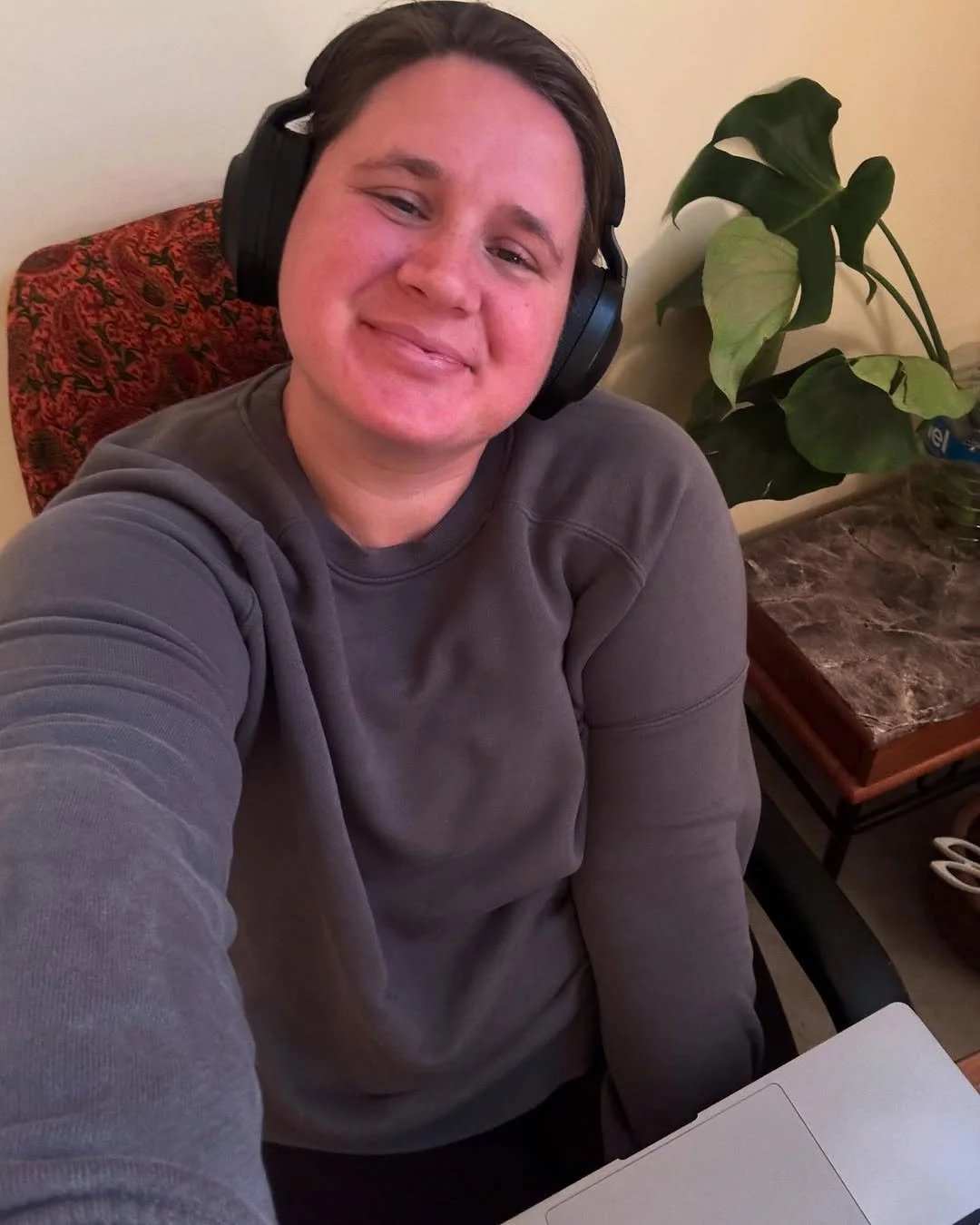
Seeing therapy clients remotely is definitely possible with the right setup.
Your physical setup communicates professionalism to your clients AND to yourself.
For me personally, it's extremely hard (read: impossible) to get in the right headspace for clinical work when my setup is all over the place. Not to mention, it just sets the wrong tone for the sessions.
You need a private, HIPAA-compliant space for video calls.
That means no kitchen table appointments, no taking sessions on your phone while walking around, and no working from coffee shops or other random locations with other people around you.
(That's not only unprofessional but also not compliant with HIPAA requirements!)
After seeing online therapy clients for 3 years, here are my best tips for setting up your workspace:
Use a laptop instead of an iPad—it's more stable and professional
Get a laptop stand so your camera is at eye level, not looking up at you from your lap
Invest in quality headphones, especially if there's someone else living with you
Test your lighting—clients should be able to see your face clearly
Also, make sure to plan for internet reliability. A portable router, a phone plan with enough data to hotspot, or Starlink Roam (especially for remote areas) are all great options!
When you're traveling and moving between locations, consistency comes from your tools, not your surroundings. You won't always have the same physical space, but you can create the same quality of experience for your clients every time you see them for online counseling!
7. Decide on your payment method
Insurance versus private pay is one of the biggest decisions you'll make as a remote therapist, and your location plays an important role in it.
Personally, I run a completely private pay practice. It gives me full location independence because I'm not tied to insurance panel requirements or limited by where insurers will credential me.
If you want to take insurance, understand that your location can affect panel participation. Some insurance companies won't credential you if you're practicing from certain states, and working from outside the US can complicate things further.
Why private pay works well for remote therapists:
You're not restricted by insurance company location requirements
You can set rates that reflect your expertise, not your ZIP code
You have more flexibility with scheduling and session length
You avoid the administrative burden of dealing with multiple insurance panels
Private pay isn't the only option, but it's the simplest path if you want true location freedom.
8. Niche down and speak directly to your target audience
When you niche down, you attract clients who are looking for you specifically, not just any therapist nearby who takes their insurance and has the right availability.
You can position yourself as the go-to expert for issues like eating disorders, OCD, postpartum anxiety, trauma, or working with teens. When you're clear about who you serve and what problems you solve for them, potential clients see you as the obvious choice for them and not just another option on Psychology Today.
This means you can charge higher rates and attract more clients you want to work with.
If you don't have a niche yet, take these steps to define it:
Identify what you're genuinely interested in and good at (AKA, don't pick a niche just because it seems profitable)
Get specific about the population you serve (age, identity, life stage) and the issues you address
Look at what other therapists in your niche are doing and figure out what makes your approach different
Test your messaging by talking about your niche on your website and in consultations, and seeing what resonates
When you clearly define who you want to serve, two things happen: you become a better fit for the clients who need what you offer, AND marketing your practice becomes easier because you know who you're talking to and what they need to hear.
9. Get REALLY good at marketing
Many therapists don't know how to market themselves because they went to school to become mental health professionals, not marketers.
I can fully relate to the struggle, but the reality is that if you're running your own practice, you must market it to get clients! And if you want to build a remote practice, becoming really good at marketing becomes even more important because you don't have local word-of-mouth referrals and the natural visibility that comes from having an office.
What to focus on:
A professional website that clearly explains who you help and how
SEO so people can find you when they search for therapists who specialize in what you do
Social media or content creation to build visibility and trust
Email marketing or other ways to stay connected with potential clients
Learning how to leverage referrals and networking
You don't have to do everything at once. Pick one or two channels and get good at them. But don't skip this step thinking that clients will just find you, because, well, they won't—even if you provide the best, high-quality care.
10. Transition your current clients
If you already have a caseload and you're planning to go remote or start traveling, you need a plan for communicating the change. I recommend:
Telling clients early, so you don't spring it on them last minute
Clearly explaining what will change (your location) and what won't (the quality of care, your availability, your commitment to them)
Addressing time zone differences upfront if you're moving somewhere with a significant shift
Building easy systems to manage scheduling (AKA, scheduling software that shows availability in the client's time zone automatically)
Offering referrals for clients who prefer in-person therapy or who aren't comfortable with the change
Most clients will be fine with the transition, especially if you're clear and confident about it. The ones who aren't might need a referral, and that's okay! Your job is to communicate professionally and give them options for mental health care, not to convince everyone to stay.
Learn more about how to work across time zones as a therapist without burning out.
What if clients don't take me seriously as a remote therapist?
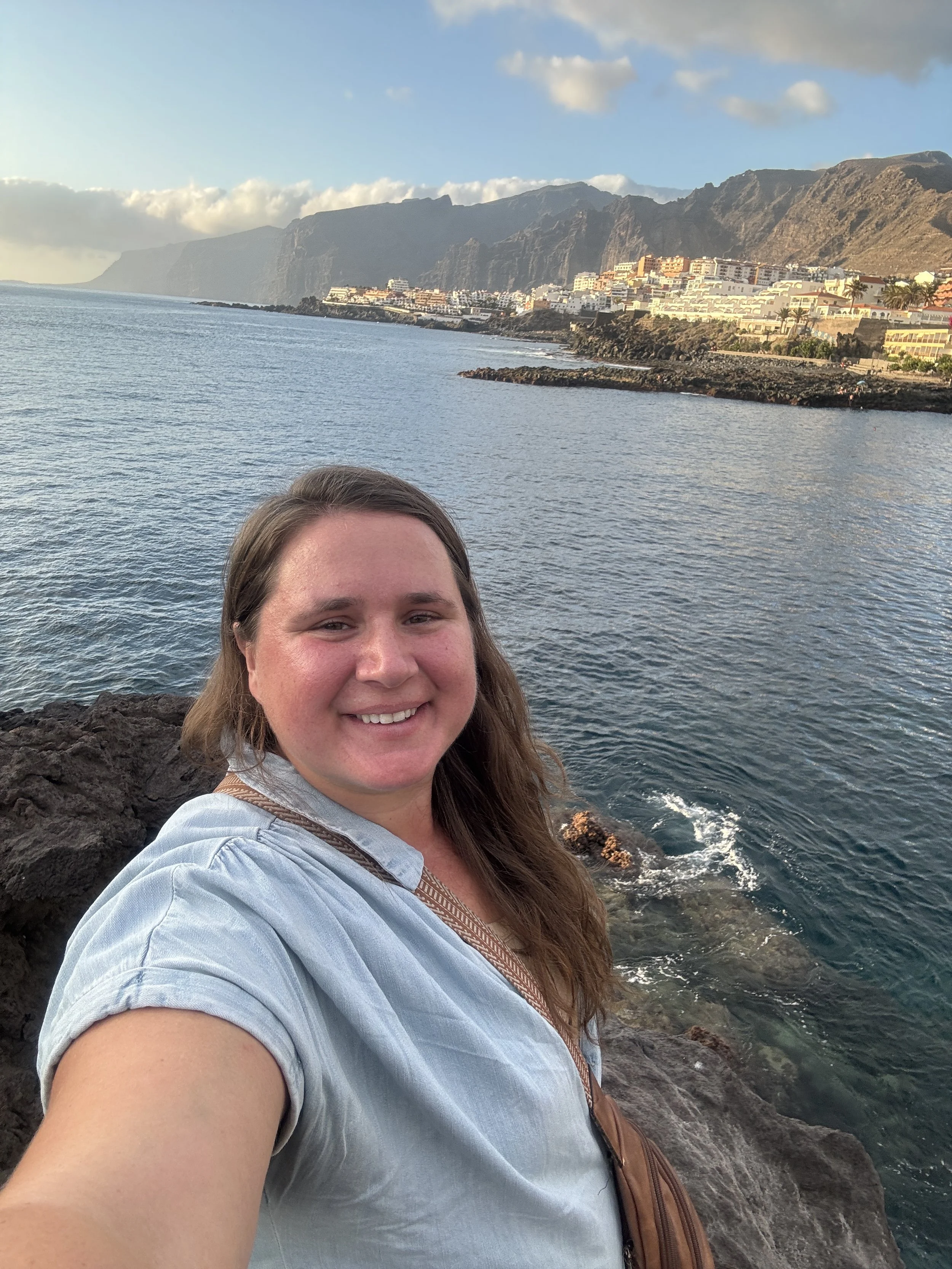
I’ve built a successful remote therapy practice while traveling full-time for the last 3+ years!
You're NO less valuable than an in-person therapist. The concern that clients won't take you seriously usually points to a marketing problem, not a credibility problem.
If location is the only reason people want to see you, you need to market better.
Many licensed counselors struggle with this, but the truth is that when you clearly communicate why clients need you specifically—when your marketing resonates with your target audience and speaks to their pain points—your physical location becomes largely irrelevant.
A client dealing with OCD doesn't care if you're in their city or three states away. They care that you specialize in OCD and can help them get their life back! That's what your marketing should communicate instead of your geographic location.
Are there any special educational requirements to become a remote therapist?
No. The requirements are the same as for any licensed therapist: a bachelor's degree, a master's degree in counseling or psychology, supervised clinical hours, and passing your licensing exam.
Whether you want to become a licensed professional clinical counselor, a counseling psychologist, or another type of licensed counselor, the path is the same. Remote work doesn't change the educational or licensing requirements. It just changes where you practice.
How to become a remote therapist abroad
You can work remotely from anywhere in the US, but you can also run your own private practice remotely from another country while seeing US-based clients. Many therapists and online counselors don't think that it's possible, but it absolutely is!
Many of the steps in this guide apply whether you're in the US or abroad, such as understanding licensing requirements, setting up your tech stack, building your marketing channels, and creating a professional workspace.
But working from another country does add some specifics you'll need to figure out:
Visa requirements for the country where you want to live or travel
Tax implications of earning US income while living abroad
Time zone management for scheduling clients
Reliable internet access in your location
Banking and payment processing that works internationally
These logistics are manageable, but they require planning.
Want to take your private therapy practice abroad? Download my free guide: Your 8-Week Checklist to Become a Digital Nomad Therapist. It walks you through exactly what to do, week by week, to build your location-independent practice!
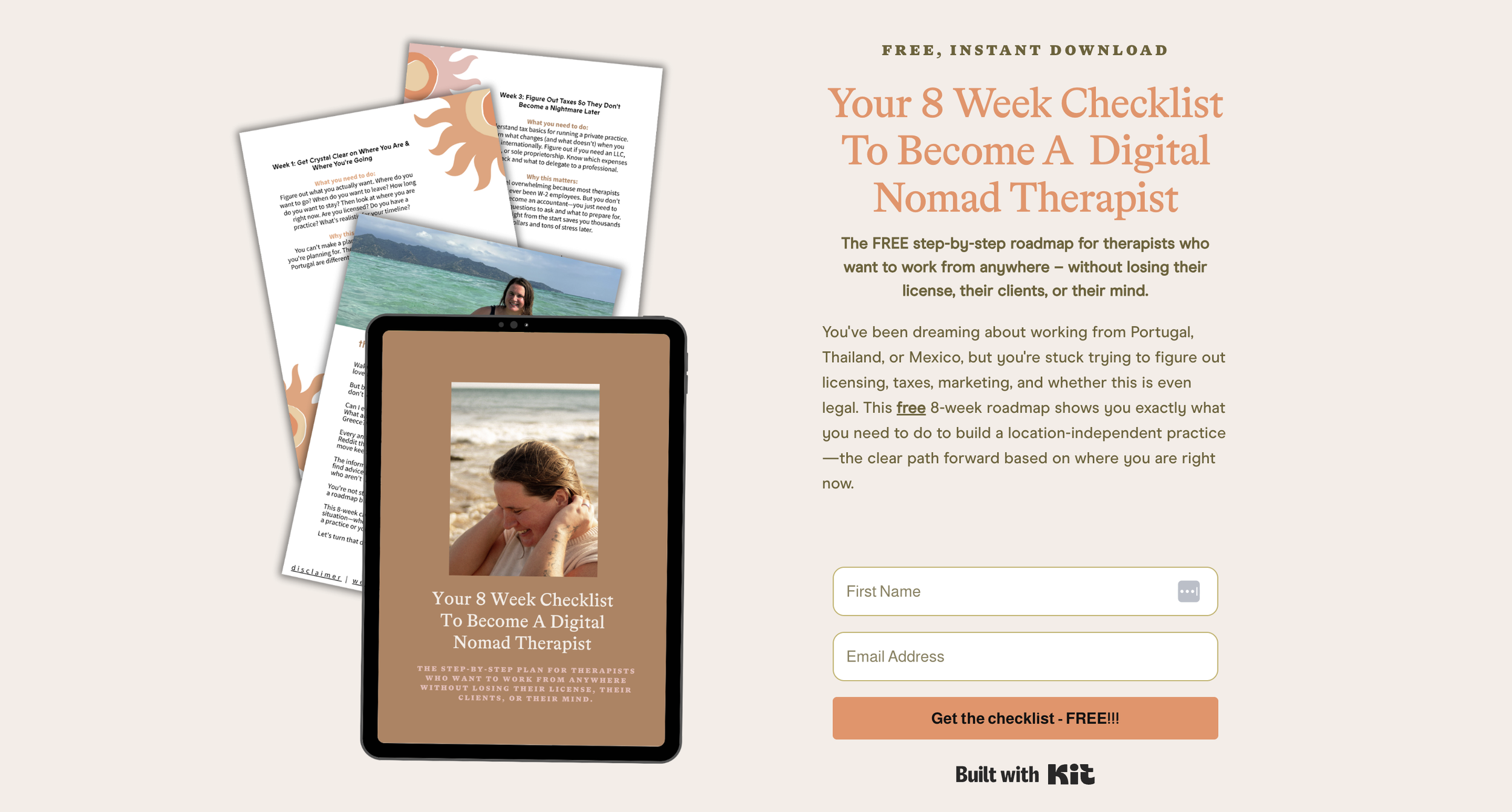
Your 8-Week Checklist to Become a Digital Nomad Therapist.
Start taking action!
If you want to become a remote therapist, the most important thing you can do right now is start researching and taking action.
That's how you build your own private practice and start seeing clients online! You don't need to have everything figured out right away, but every step will bring you closer and closer to your goal and a freedom-filled life.

Want more support? Join my membership for The Out of Office Therapist Village—a 12-month program for therapists who want to build a location-independent practice. You'll get step-by-step guidance, live support, and a community of therapists on the same journey.